As an Amazon Associate I earn from qualifying purchases. Some links below are affiliate links, which means I may earn a commission at no extra cost to you.
Double Cleansing Explained: When One Cleanse Is Not Enough
You wash your face at night, but your towel still shows makeup, your sunscreen feels like it is clinging on, or your skin feels tight because you scrubbed harder to feel clean. A common trap is treating every evening the same, then using either too little cleansing for long-wear products or too much friction for normal days.
If nothing changes, you spend another season guessing whether your cleanser failed or your skin is just supposed to feel stripped after washing.
This guide explains when double cleansing actually helps, when one cleanse is enough, and how to build a night routine that removes the day without turning cleansing into a harsh reset.
Are you cleansing for what is on your skin tonight, or just repeating the same step every night because it sounds correct?
What double cleansing means
Double cleansing is a two-step evening cleanse:
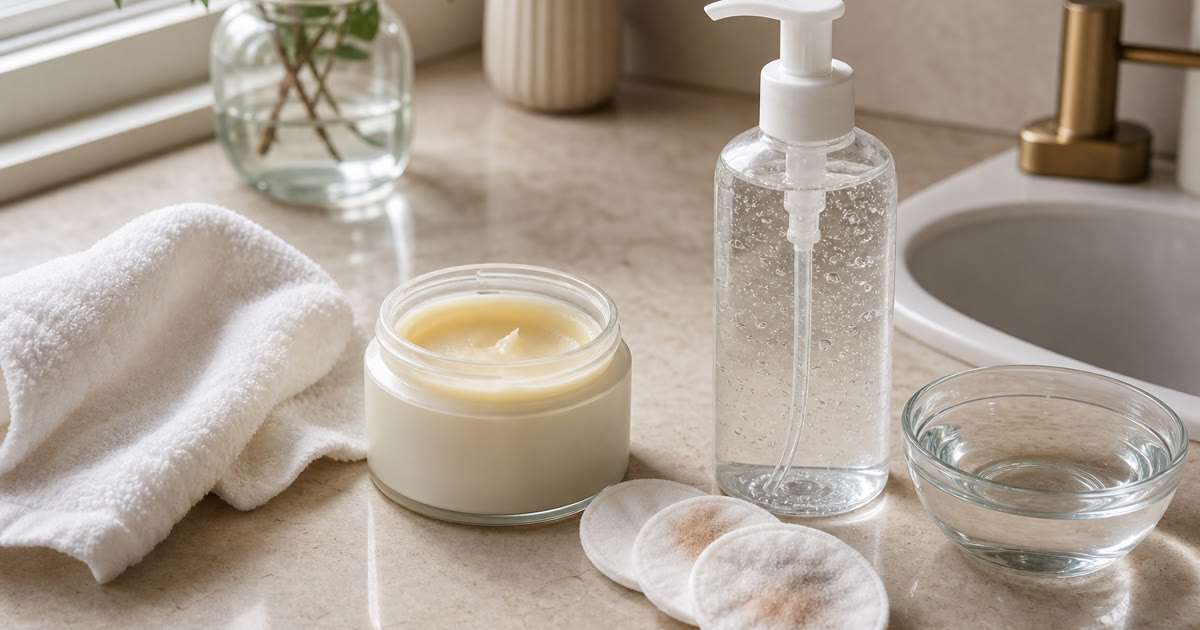
- An oil-based or balm-style first cleanse to loosen sunscreen, makeup, sebum, and water-resistant residue.
- A gentle water-based cleanser to wash away the remaining film, sweat, and everyday buildup.
The point is not to make your routine longer for its own sake. The point is to match the cleanse to what your skin is carrying. Water-resistant sunscreen, long-wear foundation, heavy concealer, and mineral SPF can cling in a way that a quick single cleanse may not fully remove.
On the other hand, if you wore no makeup, used a light non-water-resistant sunscreen, and stayed indoors most of the day, one gentle cleanse may be enough.
When one cleanse is usually enough
One cleanse can be enough when the day was simple. Think light sunscreen, no waterproof makeup, no heavy sweat, and no thick layers of product.
You may only need one cleanser if:
- You wore a lightweight daily SPF and no makeup
- Your skin feels comfortable after cleansing, not tight or coated
- Your towel and pillowcase do not show residue
- Your cleanser removes the day’s buildup without extra rubbing
- You are not using water-resistant products
For many beginner routines, a good single cleanser is easier to repeat than a two-step routine that feels like a chore. Consistency still matters more than adding steps you skip half the time.
When double cleansing makes sense
Double cleansing is most useful when the first layer on your skin is designed to stay put.
Consider two steps when you wear:
- Water-resistant sunscreen
- Tinted mineral SPF
- Foundation, concealer, or long-wear makeup
- Sweat-resistant face products for workouts
- Heavy occlusive balms during cold weather
- Reapplied SPF throughout the day
The first cleanse helps break up the stubborn layer. The second cleanse removes what is left so your moisturizer or treatment step is not sitting over old sunscreen and makeup residue.
The mistake is using your second cleanser as a scrub. Double cleansing should reduce rubbing, not create more of it.
Step 1: choose a first cleanse that rinses cleanly
A first cleanse is usually a cleansing balm, cleansing oil, or micellar water. The best format depends on texture preference and what you wear.
Cleansing balm
A balm starts solid or semi-solid, melts into an oil-like texture, and is useful for makeup, sunscreen, and dry skin types that dislike foamy formulas. Browse gentle cleansing balms on Amazon and look for reviews that mention easy rinsing, no cloudy residue, and no stinging around the eyes.
Use dry hands on a dry face unless the label says otherwise. Massage lightly, add water to emulsify if directed, then rinse before moving to your second cleanser.
Cleansing oil
A cleansing oil can be thinner and faster to spread than a balm. It is helpful if you wear sunscreen daily but dislike scooping from a jar. Search fragrance-free cleansing oil on Amazon and compare pump packaging, rinse feel, and sensitive-skin reviews.
The key is the rinse. A first cleanse should loosen residue without leaving a greasy layer that makes you want to wash aggressively afterward.
Micellar water
Micellar water can be useful for light makeup or small areas, but it often relies on cotton pads and repeated passes. If friction bothers your skin, a balm or oil may feel gentler for full-face removal.
For eye makeup or quick travel routines, browse fragrance-free micellar water on Amazon. Avoid dragging cotton pads over the same spot again and again.
Step 2: follow with a gentle water-based cleanser
Your second cleanse should feel boring in the best way. Its job is to remove remaining residue, sweat, and cleanser film - not to make your face feel squeaky.
CeraVe Foaming Facial Cleanser is a verified option to consider if you like a gel-to-foam texture for normal, combination, or oily skin.
- Best for: normal-to-oily routines, sunscreen removal after a first cleanse, simple night cleansing
- What to watch: if your skin feels tight after washing, use less product or try a creamier cleanser lane
- Shop: Check current price on Amazon
If your skin is dry or easily tight, browse hydrating cream cleansers on Amazon and read reviews from people who mention dry or sensitive skin. A cleanser that feels gentle enough to use consistently is better than one that feels powerful for two nights and uncomfortable by the weekend.
How to double cleanse without stripping your skin
Use the least dramatic version that still works.
Try this order:
- Start with dry hands and a dry face if your first cleanser directions call for it.
- Massage the first cleanse gently for about 30 to 60 seconds.
- Add water to emulsify if the product is designed for it.
- Rinse well with lukewarm water.
- Use a small amount of your second cleanser.
- Rinse again and pat dry with a soft towel.
- Apply moisturizer while skin is slightly damp if that feels comfortable.
More time and more pressure are not automatically better. If your skin feels hot, tight, or shiny after cleansing, scale back the amount of product, water temperature, or frequency.
Common double cleansing mistakes
The routine sounds simple, but a few habits can make it harsher than intended.
Avoid:
- Double cleansing every morning. Most people do not need two cleanses after sleeping.
- Using hot water. Warm or lukewarm water is usually easier on the skin.
- Scrubbing with washcloths. A cloth can help remove residue, but rough rubbing can irritate.
- Skipping the rinse between steps. The second cleanser works better after the first cleanse is removed.
- Using two harsh cleansers. Double cleansing should not mean two stripping washes.
- Adding actives immediately after irritation. If skin stings, keep the rest of the night routine simple.
The goal is clean and comfortable, not polished.
Skin type adjustments
Double cleansing is not one-size-fits-all. Adjust the texture and frequency around how your skin responds.
| Skin type or concern | Practical adjustment |
|---|---|
| Oily or combination | Try a lighter cleansing oil or gel second cleanser; avoid over-washing the cheeks. |
| Dry | Choose a balm or oil first cleanse and a creamier second cleanser. |
| Sensitive | Look for fragrance-free options and introduce the two-step routine slowly. |
| Acne-prone | Focus on complete sunscreen and makeup removal without heavy residue or scrubbing. |
| Minimal routine | Use double cleansing only on makeup, water-resistant SPF, or heavy-sweat days. |
If your skin is already irritated, simplify before adding more products. A gentle single cleanse plus moisturizer may be the better short-term move.
What to do after cleansing
After double cleansing, keep the rest of the night routine calm. Your skin does not need every treatment just because it is freshly washed.
A simple PM order can be:
- Cleanse
- Optional treatment serum
- Moisturizer
If you want a basic moisturizer lane, CeraVe Moisturizing Cream is a verified option for dry areas or simple barrier-support routines.
- Best for: dry patches, simple PM moisturizing, body or face dryness
- What to watch: it may feel rich on oily areas, so use a smaller amount where needed
- Shop: Check current price on Amazon
If a rich cream feels too heavy, browse lightweight gel moisturizers on Amazon and look for reviews that mention comfortable overnight use.
A simple decision checklist
Use this quick check before you wash your face tonight:
| Tonight’s situation | Best starting point |
|---|---|
| No makeup, light SPF, low sweat | One gentle cleanse |
| Water-resistant SPF | Double cleanse |
| Tinted mineral sunscreen | Double cleanse |
| Long-wear makeup | Double cleanse |
| Skin feels irritated | Simplify and cleanse gently |
| You are unsure | Try one cleanse, then check for residue without scrubbing |
Double cleansing is a tool, not a rule. Use it when the day calls for it.
The bottom line
Double cleansing helps when one cleanser is being asked to remove more than it can comfortably handle: water-resistant sunscreen, long-wear makeup, heavy sweat, or layered SPF. The first cleanse loosens the stubborn layer; the second cleanse finishes the job gently.
If your face feels clean, calm, and residue-free after one cleanse, you do not need to add a second step every night. Let the routine respond to the day you actually had, and your skin is more likely to feel clean without feeling stripped.
Prices and availability change often - check the current price on Amazon.
As an Amazon Associate I earn from qualifying purchases.