As an Amazon Associate I earn from qualifying purchases. Some links below are affiliate links, which means I may earn a commission at no extra cost to you.
Sunscreen for Theme Parks: SPF for Lines, Rides, and Long Walking Days
Theme park sunscreen often fails because the day feels like rides, snacks, and photos instead of hours of exposed walking. A common pattern is applying SPF before leaving the hotel, then standing in parking trams, security lines, outdoor queues, and open walkways while the same neck, ears, shoulders, hands, and scalp part keep taking sun.
If nothing changes, another park day can end with tender skin, awkward straps, and vacation photos you remember more for the burn than the ride.
This guide names where theme park sun exposure sneaks in and gives you a realistic SPF plan for lines, rides, sweat, and reapplication without turning your park bag into a beach cooler.
Which part of the day usually lasts longer than your sunscreen plan: the first line, the lunch rush, or the walk back to transportation?
Why theme parks need their own SPF plan
Theme parks combine several sunscreen problems at once. You are outside for long stretches, but the day is broken into rides, meals, photos, indoor shows, and shaded pauses that make exposure feel less continuous than it is.
The sun also hits during moments people do not count: walking from the car or shuttle, waiting at rope drop, standing in a stroller line, crossing open plazas, or sitting on an outdoor ride. A park SPF plan works best when it covers the whole day shape instead of only the hottest hour.
Good sunscreen planning does not mean carrying every product you own. It means applying broadly before the day gets distracting, packing one touch-up format, and using natural pauses before skin feels hot.
The theme park zones people miss
Most people remember the center of the face. Theme park burns often show up around the edges and on body areas exposed by outfits, bags, and ride restraints.
| Area | Why it gets missed at theme parks |
|---|---|
| Ears and hairline | Hats, sunglasses, and ponytails make the edge easy to skip |
| Neck and under jaw | Face sunscreen often stops at the chin |
| Shoulders and chest | Tank tops, open necklines, and bag straps shift during the day |
| Backs of hands | Handwashing, sanitizer, phones, snacks, and lap bars remove product |
| Forearms | They stay exposed while holding bags, maps, and stroller handles |
| Scalp part | A narrow part can burn during hours of walking |
| Tops of feet | Sandals expose skin that rarely gets daily SPF |
Use your outfit and park bag as the map. If skin is uncovered while you walk between attractions, it needs sunscreen before the first line.
Apply before the day starts moving
The best theme park sunscreen layer happens before tickets, bags, strollers, and schedules compete for attention. Once you are leaving the hotel room, unloading the car, or managing kids at security, even simple SPF steps become easier to rush.
Before you leave, cover:
- Face, including around sunglasses.
- Ears, hairline, neck, and under the jaw.
- Chest, shoulders, arms, and hands if exposed.
- Legs and tops of feet if shorts, skirts, or sandals leave skin in daylight.
- Any scalp part or exposed hairline edge.
- The area around straps after you put on your outfit or bag.
Let sunscreen settle before putting on a hat, tight backpack straps, or makeup. If straps move product on your shoulders or chest, touch those spots again before you enter the park.
Choose textures that survive walking, not just the mirror
Theme park sunscreen needs to feel good enough for heat, sweat, and repeated movement. If a product feels sticky before breakfast, you may apply too little or avoid touching up later.
| Park need | Helpful SPF format | Why it helps |
|---|---|---|
| Face and neck | Lightweight fluid or smooth gel | Easier under sunglasses and simple makeup |
| Arms, shoulders, legs | Body sunscreen lotion | More realistic for larger exposed areas |
| Ears, hairline, hands | SPF stick | Compact and less messy in lines |
| Hot afternoons | Water-resistant sunscreen | Better suited to sweat and water rides |
| Makeup touch-ups | Stick or small tube | Lets you focus on edges without a full reset |
Comfort matters because the day is long. The best park sunscreen is the one you will apply enough of before arrival and still be willing to reapply when the line finally slows down.
Verified SPF options to consider
La Roche-Posay Anthelios Ultra-Light Fluid SPF 60 is a verified lightweight sunscreen option to consider for face, neck, ears, and chest when heavy SPF makes all-day wear feel harder.
- Best for: face and neck coverage before long walking days
- What to watch: shake fluid sunscreens well and apply a complete, even layer
- Shop: Check current price on Amazon
Supergoop! Unseen Sunscreen SPF 40 is another verified option to consider when you want a smoother feel under sunglasses or light makeup.
- Best for: daily face SPF when white cast or shine makes you tempted to skip
- What to watch: the primer-like texture can feel velvety to some people and slippery to others
- Shop: Check current price on Amazon
Supergoop! Glow Stick SPF 50 is a verified stick option to consider for quick touch-ups on small exposed zones during the park day.
- Best for: ears, hairline, backs of hands, neck edges, and shoulder touch-ups
- What to watch: use several careful passes instead of one fast swipe
- Shop: Check current price on Amazon
For larger exposed areas, browse body sunscreen SPF 50 on Amazon and compare residue, scent, water resistance, and whether reviewers mention walking, sweat, or family outdoor days.
Reapply around park moments
Perfect sunscreen timers are easy to forget when a ride wait changes, a parade starts, or lunch takes longer than planned. Reapplication works better when it attaches to moments already built into the day.
Useful park cues include:
- Before leaving the hotel room if you applied much earlier.
- Before entering the park if transportation took a long time.
- After standing in a sunny queue.
- After a water ride, heavy sweating, or wiping your face and neck.
- After handwashing, sanitizer, or messy snacks.
- Before a parade, outdoor show, or long open-air wait.
- Before the walk back to the car, shuttle, bus, or hotel.
You do not need to redo every inch in the middle of a crowd to make the habit useful. Touch up the zones that lose product fastest: ears, hairline, neck, shoulders, forearms, and backs of hands.
Pack a small SPF kit
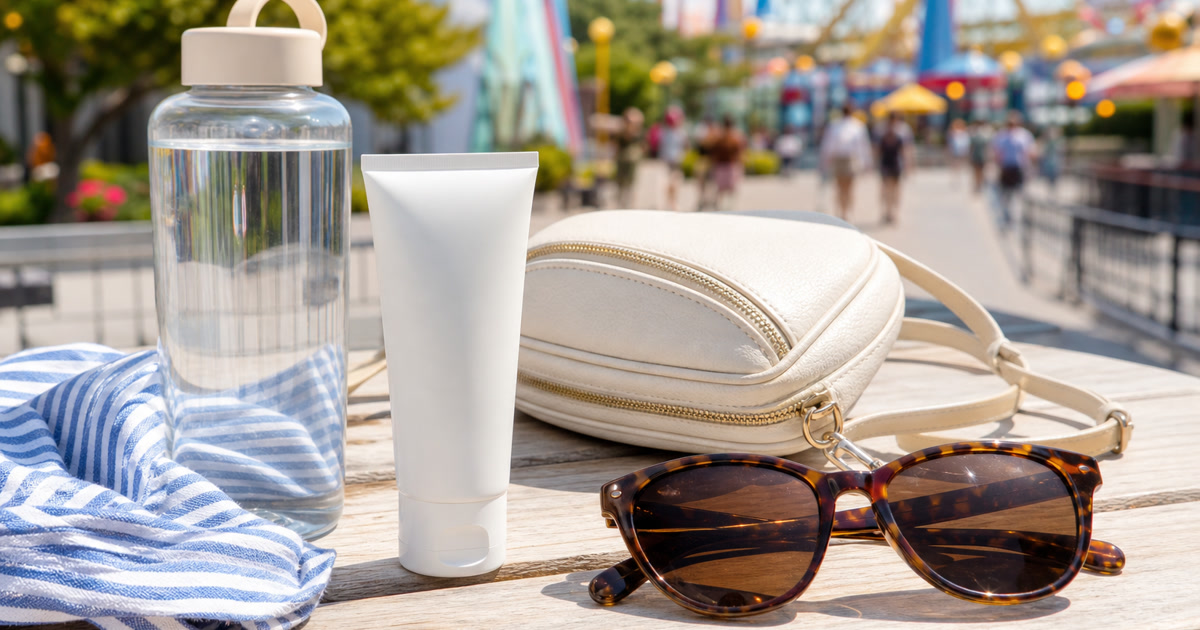
A theme park SPF kit should be compact, leak-resistant, and allowed by the park rules. Check the venue policy before packing sprays, glass containers, or oversized bottles.
A practical kit can include:
- A small face sunscreen tube.
- An SPF stick for hands, ears, neck edges, and hairline.
- A body sunscreen tube if shoulders, arms, legs, or feet are exposed.
- Sunglasses you will keep on.
- A hat or lightweight layer if it fits the day.
- A small wipe or tissue so sweaty hands do not ruin reapplication.
If you browse small crossbody bags for theme parks on Amazon, compare the park size rules, strap comfort, zipper security, and whether a sunscreen tube can sit upright without leaking.
Water rides and misting fans change the plan
Water rides can make sunscreen feel like it disappeared, even when some protection remains. Treat soaking rides, splash zones, and long misting fan breaks as reapplication cues, especially on face edges, shoulders, chest, and arms.
Water-resistant sunscreen is useful for hot park days, but it is not a pass to apply once and forget. Reapply after swimming-like soaking, heavy sweating, or towel wiping. If your clothes stay damp, pay attention to straps and necklines that rub sunscreen away.
For kids and adults, dry hands first before using a stick or lotion. A rushed reapplication over dripping skin can slide around instead of forming an even layer.
Makeup and theme park sunscreen
If you wear makeup to the park, plan sunscreen before makeup goes on. Apply sunscreen as the final skincare layer, let it settle, then keep makeup lighter where possible so touch-ups feel less intimidating.
During the day, focus on practical areas:
- Use a stick along ears, hairline, neck edges, and shoulders.
- Touch up backs of hands after sanitizer or handwashing.
- Press sunscreen onto chest or collarbone before adjusting straps.
- Use sunglasses, a hat, or shade when a full face reapplication is not realistic.
Do not let makeup make the entire SPF routine disappear. Even if you leave your foundation alone, your neck, ears, shoulders, chest, hands, and arms still need attention.
Kids, strollers, and shared sunscreen
Family park days add more moving pieces. Adults may spend so much time handling snacks, strollers, tickets, and bathroom breaks that their own sunscreen gets forgotten.
Build a shared cue:
- Apply everyone before leaving the room.
- Reapply hands after bathroom breaks.
- Check ears and necks before long outdoor waits.
- Use shade covers, hats, and clothing where appropriate.
- Keep one adult touch-up product separate so it does not vanish into the kid bag.
For children, follow the sunscreen label and pediatric guidance for age and skin needs. This article is practical skincare guidance, not medical advice.
Common theme park SPF mistakes
Watch for these patterns:
- Counting only ride time. Parking, security, walking, and lines can add hours.
- Stopping SPF at the face. Ears, neck, shoulders, hands, and feet often take more sun.
- Forgetting the ride home. Late afternoon sun can hit during the walk back.
- Applying before final outfit changes. Straps, hats, and bags can move product.
- Skipping hands. Sanitizer, sinks, lap bars, and snacks remove sunscreen quickly.
- Packing sunscreen you cannot reach. If it is buried under ponchos and snacks, you may not use it.
The fix is to make SPF park-shaped: apply broadly before arrival, keep one touch-up product accessible, and reapply around waits, water, sweat, and handwashing.
A quick theme park SPF checklist
Before the first ride, ask:
- Did I cover face, ears, hairline, neck, and under jaw?
- Are shoulders, chest, arms, legs, or feet exposed by my outfit?
- Did I apply sunscreen to backs of hands after the last hand wash?
- Do I have one accessible touch-up product?
- Will I spend time in open lines, parades, water rides, or long walks?
- Do I have sunglasses, a hat, or shade plan if the day runs long?
If those answers are handled, your SPF plan is stronger than hoping the park day feels too fun to count.
The bottom line
Sunscreen for theme parks is about the entire day, not just the first sunny ride. Lines, walking, water rides, sweat, snacks, sanitizer, and transportation can keep exposing the same face, neck, ears, shoulders, hands, arms, and feet for hours.
Apply before the day gets chaotic, pack one small reapplication format, and touch up around real park moments. A theme park SPF routine does not need to be bulky; it just needs to match the way long walking days actually unfold.
Prices and availability change often - check the current price on Amazon.
As an Amazon Associate I earn from qualifying purchases.